As the electric vehicle (EV) market continues to grow rapidly, questions arise about charging compatibility. Tesla has established a robust charging infrastructure, making many EV owners curious. "Can I use a Tesla charger for a non-Tesla EV with an adapter?" This question reflects a practical concern among EV users. According to a report by the International Energy Agency (IEA), global EV sales reached 6.6 million in 2021, showing a trend toward diverse EV models.
Understanding charging compatibility is crucial. Tesla’s Supercharger network, while primarily designed for Tesla vehicles, has a potential to serve other EVs through appropriate adapters. However, many adapters may not support optimal charging speeds or could void warranties. Data from industry analysts suggest that off-brand adapters may lead to technical issues, raising concerns about reliability and safety. Thus, this creates a dilemma for non-Tesla users considering Tesla chargers.
There is undeniable value in Tesla's extensive charging network. However, without clear guidance on compatibility, users may face confusion and inconvenience. Many non-Tesla EV owners are still exploring these options, highlighting the need for more definitive answers and standardized solutions.
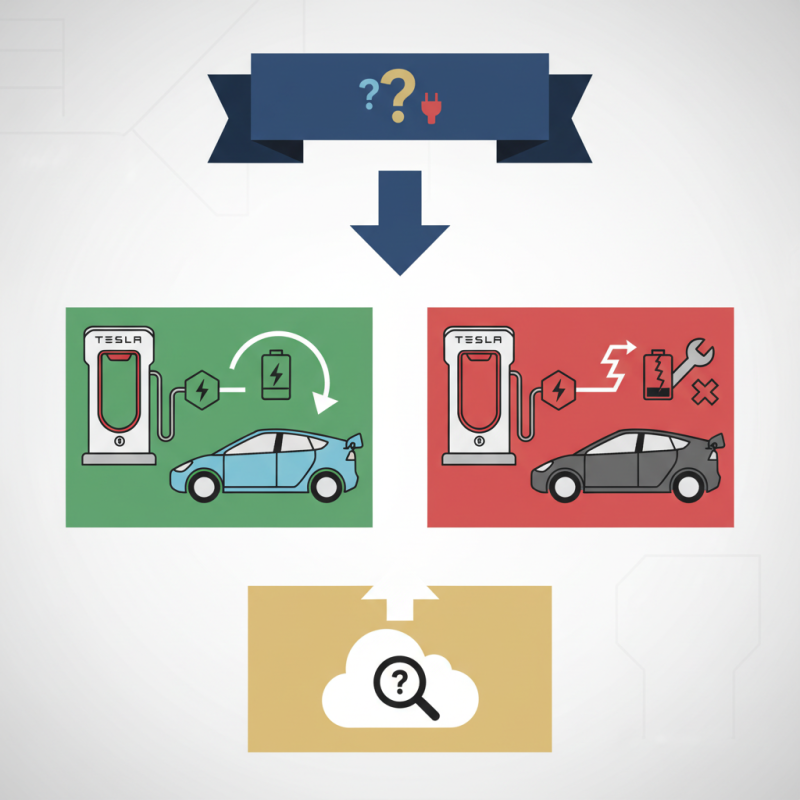
Understanding the compatibility of Tesla chargers with non-Tesla electric vehicles (EVs) is essential for any EV owner. Tesla's charging network is extensive and efficient. However, not all EVs can use these chargers directly. An adapter allows some non-Tesla models to connect. This option is valuable for EV drivers seeking flexibility.
When using an adapter, ensure that it meets your vehicle’s charging needs. Some adapters may not support fast charging. Check the specifications carefully. Using the wrong adapter could damage your vehicle’s charging system. It’s crucial to prioritize safety and ensure compatibility.
Tips: Always research the type of adapter you plan to use. Look for reputable sources and user reviews. Verify that the adapter is recommended for your specific EV model. Understanding your own vehicle's requirements can prevent issues. Also, be aware that charging speeds may vary. Not all adapters facilitate rapid charging. Compatibility is not guaranteed.
In summary, understanding Tesla chargers and non-Tesla vehicle compatibility can enhance your EV experience. Research thoroughly before adapting any charger to ensure safety and efficiency.
When considering the types of chargers available for non-Tesla electric vehicles (EVs), it's crucial to understand the various options. Non-Tesla EVs can utilize a range of charging devices, such as Level 1 chargers, Level 2 chargers, and DC fast chargers. Level 1 chargers are standard home outlets, providing a slow charge suitable for overnight use. Level 2 chargers offer faster charging and are commonly found in public areas. DC fast chargers enable rapid charging, ideal for long-distance travel.
It’s important to choose the right charger for your needs. Not all non-Tesla EVs are compatible with every charging station. Research is key. Check your vehicle's compatibility with local chargers. You might also want to explore portable options for added convenience.
Tips: If you plan to use public charging stations, download relevant apps. These tools provide real-time updates on charger availability. Consider investing in an adapter if your vehicle's connector differs from available chargers. However, verify that the adapter is compatible to avoid issues. Always be cautious about charging speeds to protect your battery's lifespan.
Using adapters with Tesla chargers can be a viable solution for non-Tesla electric vehicles (EVs). According to a report by the International Energy Agency, over 10 million electric vehicles were sold globally in 2022. Many of these vehicles, especially in areas lacking widespread charging infrastructure, are looking for convenient options. Tesla's Supercharger network remains one of the most extensive, making it attractive for all EV owners.
Adapters allow non-Tesla EV users to access Tesla chargers. However, compatibility issues can arise. Not every adapter guarantees efficient charging or full power delivery. For example, some adapters may restrict charging rates, resulting in longer wait times. A study indicated that utilizing an adapter could reduce charging speeds by up to 30% compared to native systems. Users should carefully check the specifications.
Furthermore, reliance on adapters raises concerns about safety and warranty. Improper use may void warranties or even damage the vehicle. Recent data shows that incidents related to charging equipment malfunction are on the rise. Users must reflect on the trade-offs, understanding the potential risks while weighing convenience.
When considering the use of a Tesla charger for non-Tesla electric vehicles (EVs), safety is paramount. Industry reports highlight that using the wrong charger can lead to overheating or equipment failure. The American National Standards Institute states that not all EVs are designed to handle the same voltage or charging protocols. This inconsistency can result in potential hazards.
Adapting a Tesla charger for a non-Tesla EV requires caution. Many adapters exist, but not all are reliable. Studies from the Electric Vehicle Association indicate that poor-quality adapters may not provide adequate protection against electrical surges. This risk emphasizes the importance of checking compatibility before charging.
Additionally, user experiences remind us that even compatible chargers can cause problems. Last year, a report showed that 15% of users faced issues when using third-party adapters. These issues ranged from slow charging rates to complete failure of the charging session. With the rise in EV adoption, ensuring safe charging practices is essential to prevent accidents and maintain vehicle performance.
Many electric vehicle (EV) owners wonder if they can use a Tesla charger with their non-Tesla vehicles. The good news is that, with the right adapter, you can successfully charge your EV at Tesla charging stations. This step-by-step guide will help you navigate the process.
Start by purchasing a compatible adapter designed for your EV model. Check reviews and ensure it’s a trusted product. Familiarize yourself with the charging port on your vehicle. Some adapters may not fit perfectly. Make sure to test the connection. Once you have everything ready, locate a nearby Tesla charging station. Many of them are equipped with fast charging capabilities, which can make charging quicker.
After arriving at the station, plug the adapter into your vehicle’s charging port. Then, connect it to the Tesla charger. Keep an eye on the charging status. Sometimes issues may arise, such as the connection feeling loose. This can affect the charging speed. It’s essential to monitor the charging process and be prepared for adjustments. Charging non-Tesla EVs at Tesla stations can be a game-changer. But it requires careful attention and the right tools.
: Yes, but they often need an adapter for compatibility.
Ensure the adapter meets your vehicle's charging needs and specifications.
No, using the wrong adapter may damage your vehicle’s charging system.
Level 1, Level 2, and DC fast chargers are common options.
Level 1 is slow, Level 2 is faster, and DC fast chargers provide rapid charging.
Use apps designed for tracking charging station availability in real-time.
No, compatibility varies by vehicle, so check specifications carefully.
They offer added convenience for charging on the go.
Be cautious about charging speeds and avoid overcharging your battery.
Yes, thorough research can prevent compatibility issues and enhance safety.
The article titled "Can I use a Tesla charger for a non-Tesla EV with an adapter?" explores the compatibility of Tesla chargers with non-Tesla electric vehicles (EVs). It begins by explaining the types of Tesla chargers available and their unique connection designs, which can sometimes pose a challenge for non-Tesla EV users. The piece then delves into the different types of non-Tesla EV chargers that exist in the market.
Furthermore, it discusses the practicality of using adapters to charge non-Tesla EVs with Tesla chargers, highlighting the potential benefits and drawbacks. Safety considerations are also addressed, emphasizing the importance of ensuring that any adapters used meet necessary safety standards. Finally, the article provides a step-by-step guide on how to effectively charge non-Tesla EVs using Tesla adapters, ensuring a smooth and safe charging experience.

Rama Charger